Wednesday, 22 June 2016

Fantasy Island

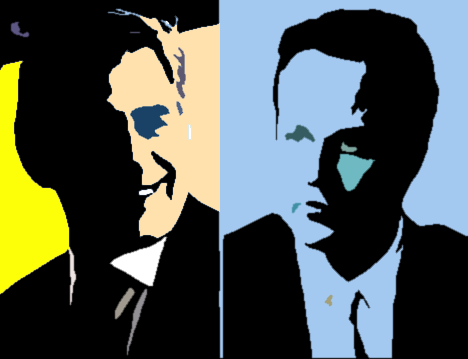
BREXIT voters are living in a fantasy world every bit as made up as Middle Earth or Westeros. Unfortunately, it's a shit one.
Nigel Farage's next poster idea

A small child is refusing to eat her dinner. Her father, having exhausted logic such as food assuaging hunger, attempts to exploit her childish mind.

"If you don't eat your dinner," he warns. "Mice with the legs of giant spiders will wrap you in webs of melted cheese and carry you away."

The girl looks at her father as if she was peering over glasses, even though she doesn't wear them. "Don't be silly, Daddy," she replies. "I'm not daft, you know. If there really were mice with the legs of giant spiders that spun webs of melted cheese, the giant cats with squid tentacles and faces made of herring would have eaten them."

Welcome to the intellectual world of the EU Referendum, where facts are routinely ignored in favour of who can spin the most persuasive lie. 

I refuse not to be disappointed in the politicians responsible for this situation. One has to maintain a level of disappointment: it's like putting oil in your car - as soon as you stop being disappointed the whole system grinds slowly to a halt. But I'm mostly disappointed by the people of England, the country of King Arthur, Robin Hood and The Lord of the Rings. It's not even that they are clearly living in some sort of fantasy world, like transdimensional beings whose bodies are present in this reality but whose minds are active on a different plane entirely. No, it's just that given some sort of collective derangement has made them reinvent their reality, why have chosen one so unremittingly shit?

The last few years in Britain have not exactly been Utopian. If half the British population want to "get away" in their heads, "escaping" like Sam Lowry at the end of Brazil, imagining he can escape bureaucracy, pollution and torture to live an idyllic life in a mobile home on the slopes of rolling hills, who can blame them?

Except that's not really what they've done. Like Bilbo in The Hobbit, they escape from goblins to be caught by wolves. Their collective delusion takes a slightly disappointing reality and replaces it with a really disappointing fantasy. At least David Icke believes we are in thrall to lizard people. What have we got?

A fantasy world where Nigel Farage and Boris Johnson are your last hope. A Middle Earth where orcs don't cut you to pieces, they undercut your friend's friend's painting and decorating business. A medieval kingdom in the thrall of a dragon that takes £350m a week from you instead of virgin princesses*. They’ve conjured a world in which a reality which is already grimly disappointing is unspiced by the idea that’s it’s all about to get worse because the EU (standing for the Empire of Unbritishness, presumably) is planning to replace you with a Turk, in some sort of racially confused remake of Invasion of the Body Snatchers. 

If you tell these low-rent fantasists that immigration is good for the economy, they don’t believe you.  It’s true that we’ve not been very good at sharing the benefits of immigration (thanks, austerity); then again we haven’t been very good at sharing the benefits of being a country stuffed full of rich people, but membership of the Communist Party doesn’t seem to be burgeoning. 

This is because people are incredibly selective about their lies, and they’ve picked one they like. And that’s the disappointment.  If you’re going to live in your own world, it says something rather horrible about you if populate it with a zombie apocalypse of benefits-eating foreigners rather than, say, talking manta rays and synchronised-swimming badgers.

I fully intend to exploit my imagination not to exaggerate my misery but to protect me from the bleakness of Brexit Britain. The fact that our collective, mean-spirited delusion is about to compound the evils of the financial crisis and pointless austerity means that I may have to spend the next few decades believing I'm a magic yo-yo. Don't do that to me. Vote Remain. 


* the true number of virgin princesses** claimed by dragons is heavily disputed, thanks to a rebate and a misunderstanding over whether you get a certain number of princesses back before or after the dragon has eaten them.
** Note the lack of a capital letter. This has nothing to do with Richard Branson.

Thursday, 10 May 2012

Blues’ “Mid Term Blues”

 There’s recently been quite a lot of wriggling, particularly by the Tories, but also by the media as they desperately try to show ‘balance’. This wriggling has mostly taken the form of pointing out that Governments seldom do that well in mid-term local elections, and pointing out that even the mighty Blair Government lost over a thousand seats two years into their landslide 1997 term.

The problem for them, and for people who believe Ed is nothing but Labour’s answer to William Hague, is that although it’s true that Labour struggled in 1999 there is one crucial difference.

They still, technically, won it.

The 1999 share of the vote was this: Con 34%, Lab 36%, Lib 25% - that’s very similar to the national election of 2005. The Tories will probably be forced to admit they lost that one.

[this doesn’t stop Adam Lent, whom I like, saying “incredibly Hague wiped the floor with Labour in 1999” – losing by 2% doesn’t sound all that floor-wipey to me. Iain Dale is fixated on the number of council seats won, but the number of seats contested this year was only 36% of the number contested in 1999. As an adjusted figure (reducing seats won by the percentage difference in those up for grabs), Ed’s team did 57% better than Hague did in 1999, while Cameron did 63% worse than Blair. Clearly, I have no data on the type of seats in play in each year – but it shows the danger of basing an analysis purely on seats won.]

The 2000 election (comparable to next year’s vote, one would say) is lot more helpful to the Tory argument – they won it convincingly in the year of Labour’s first crises, such the fuel protests and blockades (though these were yet to happen). But again, the problem is there’s more going on. The ICM historical polls are helpfully published online, and they tell us that in 2000 the national polling only gave the Tories one lead, of 4%, right slap bang in the middle of the fuel crisis. 4%. And that glimmer is the only, the only poll-lead the Tories scored in ICM national voting intention between 1997 and 2005.

Conversely, since the coalition ‘win’ the ICM polling has metronomed back and forth between the two major parties, and the most recent poll, just before the local elections, puts Labour on an 8% lead. The April poll in 2000, before that doubtless encouraging Tory local triumph?

National Voting Intention April 2000:
Con32%           Lab 45%           Lib 15%

For the Conservatives, the bad news is not that they lost the 2012 local elections, but that the results closely mirrored polling of the British people’s national voting intentions. Either the polls are back in pre-1992 error mode  (and there’s lots of comment arguing based on the precedent of Kinnock!), or there’s something very different at work here. For me, Ed has already proved that he’s not William Hague.


Tuesday, 15 November 2011

Gay Gordon, Gloomy Dave

I was having a thought this morning. Just a little one, but it kicked off a lot of other thoughts like someone dropping a pebble on a neatly arranged cluster of marbles.

Gordon Brown is a vilified figure, to the extent that it's embarrassing for Labour a politicians to be seen to have been too close to him (The Guardian this morning felt the need to point out that Shadow Foreign Sec Douglas Alexander had "fallen out" with his former mentor) . Biographies and documentaries paint him as a bullying monster and a raging megalomaniac. I'm not in a position to argue with any of these things, but it's interesting to compare one aspect of him with his shiny faced successor in Number 10.

When the global financial crisis - which most people who don't have foam dripping from their mouths will concede was mostly born of reckless behaviour by US banks - hit Britain, Gordon had a choice. He could immediately blame said American institutions and start warning us how terribly, terribly bad the whole thing was going to be. Gordon didn't do this, however, understanding as he did that the more terrible he told people it was going to be, the more terrible it actually would be. This is a fairly basic part of economics that even duffers like me understand - if people are terrified of the future they stop spending, making any contraction in the economy that much worse. Or he could be upbeat - Mr Brown insisted repeatedly that Britain - although hugely reliant on the financial services sector since the 1980s - was actually well place to weather the economic storm.

"Tell 'im he's dreamin'" was the basic response from many, but although the financial crisis hit us harder and longer than most countries, we did actually start to pull out of trouble at a decent lick in early 2010.

But this was too late for Gordon. By insisting that we would be all right, he left himself in a weak position when it came to blaming international causes. If Britain is "uniquely well placed", then it's different to other countries. If it's different to other countries, recessions of international causes do not necessarily have to happen here. If they still *do* happen here, it must be the Government's fault. However, there's a very real chance that the recession was less severe because of the constant reassurance issuing from Number 10. Alistair Darling couldn't stop himself from prognosticating gloom, but at least he kept it to newspaper interviews rather than banging on about it in every speech opportunity that came his way.

David Cameron is a superb political operator. There's no way he's going to make the same mistake as Gordon and leave him unable to blame international circumstances for the floundering state of the economy. The only problem is that Gordon's approach wasn't a mistake. It was the right approach. We've now had weeks of Cameron and Osborne warning us that the Euro-crisis would precipitate some sort of financial Armageddon that Britain cannot escape. On top of high inflation and wage cuts (in real terms or just real) and with VAT increases and far rises, we're now being prepared for some sort of economic pebble to drop down right on our neatly clustered marbles. It's hard to imagine consumer demand recovering any time soon.

In seeking to avoid responsibility for the problem, Cameron is very likely to make it worse. And if duffers like me get the consumer spending (and company hiring) link to confidence, so should he. He should accept that if the economy fares that badly his chances of re-election are pretty slim anyway and 'take one for the team'. He should start acting as if Britain has the ability to fight off the effects of the Eurozone crisis, even if he doesn't really believe it, because if he doesn't it's going to be a whole lot worse. If even "power hungry" Gordon can see that, surely Dave can.

SR

PS: Maybe I'm wrong - maybe Dave is an avid reader of Paul Krugman and refuses to believe in the Confidence Fairy. If so it's a shame he hasn't spotted the defence of counter-cyclical Keynesian spending while he's at it, though.

Tuesday, 27 September 2011

WIIFTNIMBYS?

Michael White has posted a balanced but fairly upbeat analysis of Labour's 2011 conference so far. What's got me writing is this little snippet:

"All politicians talk about devolving power from Whitehall, only to reassert themselves against local decisions they don't like, as Eric Pickles is already finding."

And I wondered - why do local people fight back against decisions (mostly planning, I would think) that the national Government thinks would be broadly positive for the country?

I grew up not in suburbia exactly, but in an off urban/rural dividing line. The front of the house faced the busiest road in the area (since slightly healed by a by-pass), while the back looked over flat arable fields. Once they put in double glazing in the front windows it was pretty lovely, but last year we heard that the council is pushing forward plans to pave over the field at the back and build a new housing estate. It's been rumoured for 30-odd years, so no-one is shocked, but it'll be sad for anyone still living there when the bulldozers roll in.

It's no surprise that there is local opposition. The main road may well become insanely busy again, the schools might get overcrowded. It's all great news for owners of various local supermarkets and other commercial enterprises, and the developers will make a packet. The Conservative Council will hold out their hands and fees from the development and massive hike in Council Tax returns will make sacrificing some beautiful green fields a very rewarding one. I'm sure voters across the district will benefit from a small cut in their taxes as a result, and of course it's undeniable that we do need to build more homes - somewhere.

But I wonder - what will the families and home owners fringing the field get? The ones whose view will be irreparably harmed? Whose cars will get stuck in the extra traffic jams, or whose children will end up lost in bigger class sizes? I suspect very little. And I'm sure the same applies to every other NIMBY the country over. The national or regional economy may well benefit from a new factory or energy plant, but do the actual locals - the people who have to look at a chimney or breathe in its smoke - get a fair share of the resultant benefits? We're probably talking money here in most cases, but if you're building a factory of buildings at the end of someone's back garden, the very least you should offer them is a slightly longer garden.

There's a sense, I suspect, for most people that councillors and developers are the only people who really get a pay off from controversial planning, or that any democratic benefits are thinly spread and as likely to apply to someone who'll never see the new developments as those who'll have them shoved under their noses.

This is a post of questions, but I can't help thinking that if we answer them it might just be a fairer way of deciding whether things go ahead than moaning about local opposition in the face of national need. And if you fix that maybe localism could be trusted to proceed unhindered for a while and we can see if it works.

Wednesday, 7 September 2011

Talking Round Corners

Slightly fascinated by a part of the exchange in PMQs this morning. Ed Miliband accused the Government of presiding over a rise in waiting list times. The PM responded by saying they'd gone down. Presumably there is some truth buried somewhere, but two things puzzled me. Firstly, Ed was trying to say that public sector reforms were not needed; why then did he want to suggest that the NHS was floundering? But secondly, David Cameron has not yet implemented any of his reforms on the NHS (except in a few pilot pockets that are unlikely to affect overall figures), so why does he wish to suggest that the NHS is doing well?

There must be some logic, but I fear logic has been superseded by the usual presumption that everyone else is fucking stupid and only understand "fire bad, tree pretty", or in this case Waiting List Up or Waiting Lists Down.

Friday, 2 September 2011

Can Benefits Claimants Sue the Daily Express?

I was idly thinking, as I spotted The Daily Express' latest headline "4M SCROUNGING FAMILIES IN BRITAIN" whether there is a possibility of some sort of collective legal action by recipients of benefits in the UK.

Of course, some might think it flattering to be described as 4 metres tall, but putting aside lazy typography there must be some harm befalling these people because of the misrepresentation of their circumstances. Can the Express continue to lie with impunity? I'm not quite sure how it can. You can't call millions of people scoungers and expect there to be no harm caused to them.

Especially since, as usual, their figures are more than selective. It turns out that to qualify as a scrounging household you need only 1 adult of working age. They then admit that 7.25million people are living in these workless households. Wow. Small families. The average family has 1.8 children these days. 75% of households still have two parents. So that's a an average family size of 3.3 people, whereas these "workless families" are only 1.8 people strong. And there are only 1.85 million children in this equation. Who are these families? What are the definitions? Are we excluded pensioners, or is claiming your pension now considered to be scrounging? Are these older workers, whose children have long since left and might be finding it hard to keep up with the ever changing labour market (not that the Express would give a shit, clearly)? All of which is entirely unclear from a Daily Express article that finally admits, despite its screaming headline, that there are 38,000 fewer workless households this year than last, despite rising unemployment. And this is a headline? Did they just forget to mention it last year?

This is not news. It is campaigning. The Express is aligning itself with the Tax Payers' Alliance to support benefit cuts, and ultimately tax cuts. There clearly *is* a problem with worklessness in this country, but it is not one that will be addressed by the kind of economic policies proposed by the TPA. And it certainly won't be fixed by demonising the workless and exaggerating public perception of how many there are, but that is the very mission on which they have embarked. "Confusing and over-generous benefits are trapping people in worklessness" says the TPA. No mention of any other possible factors, but that would confuse there nice simple world view. How about a lack of jobs? Cut benefits, starve the economy of money, reduce jobs, fix worklessness? Is that how the TPA rolls? Good to know they can find novel ways out of the liquidity trap.

But seriously, if I allege on the front page of the Express that Jerry Kitchener of Rotherhithe is a scrounger, I imagine Mr Kitchener might be entitled to some sort of recompense. So why - if I smear 3.88 million households (probably including pensioners, single parents and those too ill to work)- can I keep doing it?

Sometimes I wish I knew more about the law. But at least I feel I'm on safe ground announcing that The Daily Express is poorly written and following a suspect political agenda. The joy of common knowledge.

Friday, 22 July 2011

He Did Everything Right

"LEO: ...in the two and a half hours we've been sitting here have you discovered one thing that he's done wrong? OLIVER: No. LEO: So, what's your problem? OLIVER: That's my problem, Leo. Are you out of your mind? He did everything right. He did everything you do if your intent is to perpetrate a fraud." The West Wing, Season2. Apparently - in this is only hearsay based on a lot of pre-election mutterings - The West Wing is one of David Cameron's favourite programmes. If it is, he certainly doesn't pay attention to it as closely as he should. The above quote is from a story line about how liberal President Jed Bartlett turns out to have concealed his Multiple Sclerosis from the US public prior to his election. Jed justifies this in two ways - he only intends to serve one term, minimising the chances that his condition will ever affect his Presidency, and he views it as a sin of omission, rather than a lie. He has always been careful not to put himself in a position where he is forced to claim that he does not have MS. Bartlett eventually realises that this carefully constructed morality is, in itself, wrong. Cameron's handling of the sticky News International phone has been steadily more sure footed over the last few days, recovering from a stodgy start where Ed Miliband was making all the running to look as though he might survive with his reputation intact. After all, he hadn't really done anything *wrong*, had he? Yes, he's trusted someone that he shouldn't have trusted, but really the blame was on Andy Coulson, and not his erstwhile boss. Cameron didn't hack phones; he was innocently exploited by someone who possibly had. But yesterday a new, interesting, angle appeared. Alistair Campbell and his Labour successors had been given the very highest security clearance (how else would Campbell have been able to get involved in the production of the "dodgy dossier"?). Such clearance requires the individual to be subject to very rigorous screening and investigation. This morning it was confirmed that Cameron's current press Chief, former BBC man Craig Oliver, also has top level clearance, and will have undergone the same examinations of his past. The really interesting thing, though, is that Coulson was not given such clearance, meaning that he did not have to undergo anything like as through an examination. This jarring blip in the sequence of high level access for Press Chiefs screams for explanation, because the one that springs first to mind is good old plausible deniability. If no-one exposes Coulson's possible misdemeanours, then Cameron can very fairly rely on the "trust" response. But if Cameron truly trusts Coulson, why was he afraid of what a security investigation would uncover? Despite that, David Cameron has insured that he really didn't know anything about Coulson's past, simply because he didn't look very hard. But there's no actual wrong-doing here, surely? Is there one thing that Cameron has done wrong? No. He did everything right. Oh dear.

Wednesday, 25 May 2011

Twitter, Censorship and Prurience.

(warning - no opinions formed in this blog have been scientifically tested)

I have just read - with a certain amount of stomach churning horror - a Guardian Comment is Free article demanding that Twitter feeds be delayed so that "someone" can ensure they abide by the law. This would obviously have the effect of killing this form of social media stone dead - the resources do not exist to check tweets with the speed needed to keep the Twitter format fresh and interesting, and even if it was virtually instantaneous you would still miss that sense of anarchy, or someone-could-say-anything that makes it challenging and fascinating. Watching successful, allegedly intelligent people get themselves into trouble for publishing photos of themselves driving in the fast lane or criticising their superiors is a game of schadenfraude even better than watching George Osborne announcing growth figures. But on a worthier note, Twitter's contribution to spreading revolutionary fervour around Egypt, Tunisa and Libya *can* be overplayed, but certainly shouldn't be ignored. Twitter is a mass voice, a crowd-sourced social thermometer, and even if it gives you contradictory readings half the time its still an unrivalled indicator of mob intellect that breaks the shackles of the no-debate sterile media in this country, not to mention the timid politicians that claim to run it.

But enough evangelism. Back to footballers shagging.

I have a smidge of sympathy for Ryan Giggs - not because he hasn't been a shit to two women, but because of plenty of men (and women) have been this much of a shit and no-one cares two hoots - but in the end, the only people who actually matter in the whole scenario are those directly involved. Imogen Thomas clearly noticed that he was shagging her. I assume the inordinate amount of time and money that went into procuring the superinjunction tipped off Mrs Giggs, even if her husband's honesty didn't. The important people knew. Does it really matter who else is talking about it?

Clearly it does if Giggs wants to profit from his image as a faithful family man. But obviously there's a further moral quandary in allowing him to do that if he isn't one. But as a footballer, it means fuck all. He just joins a club most of his shallow fucked up colleagues have already signed up to.

So I'm forced to ask, in the great "free speech v privacy debate", what gives this multi-millionaire shagger the right to fuck not just a busty TV nobody, but also my right to reasonable self-expression? Not my ability to name shaggers - I really don't care - but any attempt to protect them also protects people that don't need protecting. The slippery slope easily becomes a water slide.

Secondly, and this is where my thoughts get really experimental, if gossip was all over the free Twitter services all the time, people wouldn't get their gossip from newspapers. Tabloids couldn't boost sales by including stories that people had already swapped amongst themselves. They would stop paying journalists to find this stuff out. Consequently although everyone on Twitter would be talking about everything that had been discovered, fewer things would actually be discovered in the first place.

It's just a thought. And possibly as convincing as coalition economic policy, which I note Barack Obama has declined to support.

Thursday, 5 May 2011

New Voting! Now 4.87% Fairer!

I'll level with you. I don't think this Government is particularly competent. I'm predisposed to think that, but the more I hear of cock-ups, getting policy from watching TV, forgetting to consult important people or just basically not knowing how stuff really works, the Con-Dems really don't have much of a clue. Probably, if you believe that the state is an irrelevant intrusion into people's otherwise perfect lives, it's a bit of a shock to find that running the country is actually quite fiddly.

But one part of the brain is alive and kicking within their top brass, and that's the bit that got them where they are now. At the moment it's still unclear what the result of the AV referendum is: by which I mean we don't yet know how massive a drubbing electoral reform has been given at the ballot box. But we do know it's massive.

And I suspect David Cameron has been in control of this since he signed that coalition agreement on a sunny mid May day last year. His genius may look even greater against Clegg's monumental naivety, but by offering the Liberal Democrats a system that made voting about 4.87% fairer, he positioned his troops at the top of the hill. As long as he was ruthless enough to charge, he was always going to win.

This is simply because, in the face of the hostility and bare-faced lies unleashed by the NO campaign, the half-hearted effort of a deeply unpopular Liberal Democrat leadership were never going to inspire the kind of resistance required to turn lies against the liars.

When the Tories used negative campaigning against Blair in 1997 ("New Labour, New Danger!") it didn't work simply because the public were a lot more excited about Blair than they were scared of Labour. The Tories lost ground whenever they tried the tactic. This time round, not even supporters of the change were actually that excited about it. And it was about as easy to get the average-not-really-that-fussed-about-politics type person to believe that this was any more interesting than, say, pensions.

The YES campaign found themselves engaging in debate like the underdog in a contest to be President of the Droitwich Accountant's Association.

The NO camp shouted "AV is expensive!" YES replied "No, not really, well maybe a bit, but nowhere near as expensive as you're saying!" (the massed crowds cheer their defiance)

The NO camp opined "It is the end of One Person One Vote! Supporters of fringe parties have their votes counted MORE TIMES. Tis the end of British democracy!!" YES reply "No, not really, because even if your vote hasn't been transferred upon the elimination of your unsuccessful preferred candidate and you did in fact vote for a more successful candidate who lasts until the final round of voting redistributions your vote is counted every time!!" (the Red Arrows do a fly past)

And so on. Lies like this require an impassioned defence, a roar of outrage that scares the liars and tests their courage. Do we dare continue to tell such porkies in the face of such public outrage? A revolution is imminent! But no one is going to wave a flag, release a balloon or march with a banner for the sake of AV. It's better than First Past the Post, but First Past the Post had the good PR sown up when it was invented. It *isn't* first past the post! The post moves around according to how far the candidates get. AV actually *is* first past the post, in that the finish line stays exactly the same place election to election. People have been spinning FPP for more than 100 years. We never stood a chance.

It's hard to believe that Cameron hadn't got this figured out last May when he signed on the dotted line. He might not be clever enough to run the country, but he's certainly cunning enough to run the Conservative Party.

Friday, 18 March 2011

No Fly With Me

Recent debate about the Middle East has been swinging back and forth like an England World Cup match.

Initially, as regimes fell is North Africa, the feeling was that it was all a bi embarrassing for the supporters of the Iraq War. The argument went that that the Tunisian and Egyptian revolutions showed that eventually oppressed Arab people would rise up and enact their own regime change. If Bush & Blair had been a little more patient, Saddam would be gone by the hand of his own people, and a foreign policy disaster avoided.

Naturally, neo-cons suggested that it was only the introduction of that guiding light of Arab democracy, Iraq, that inspired the revolutions. And yes, it seems pretty likely that anyone would take a look at modern Iraq and think "why can't we be more like that - I was bored of having legs anyway".

But Muammer Gaddafi, as he so often does, has confounded things. Ben Ali and Hosni Mubarak might not have been terribly nice people, and I'm glad I never invited them for tea and biscuits or sang for them, but Saddam Hussein they were not. It wasn't particularly reasonable to point them out and say "Hey, that could have been Iraq!" But the People's Colonel is giving us slightly more of a glimpse of how The Sadman would have behaved had his people flooded Baghdad with calls for change.

He would have killed quite a lot of them. As he did several times previously.

So now we end up, rather than learning the lessons of history and leaving people to sort things out, we have seemingly learned different lessons of history and realised that if we don't act all that will happen is that a lot of Libyans will die. But recognising what didn't work so well in Iraq we're keeping the our boys in Khaki out of the firing line, and instead essentially providing an airforce for the rebellion.

And we're all none the wiser - yet - as to whether we're doing the right thing. How the fuck are you supposed to tell?

Sunday, 19 December 2010

Ed Miliband and the art of Swing

Over the years many analogies have been made about cricket and politics. Sometimes it got so confusing that Zimbabwe picked a player called Alistair Campbell. It may have been no coincidence that the glory days of Shane Warne and Muttiah Muralitharan happened to run alongside the might of New Labour its pomp. Spin all round.

But I was in the pub - like an ITV panel discussion but without a picture of London behind us - and repeated Laboury types were expressing their disappointment that Ed Miliband was yet to knock David Cameron over with the sheer force of his personality and political brilliance. There were even comments about how Ed might be Labour's Hague or - worse - IDS.

I understand the concern - here we are in the grip of a major political crisis. The state is being dismantled. Jobless numbers are rising and likely to rocket in the New Year. The children of Pink Floyd guitarists are setting fire to Winston Churchill. Why, they scream, is no-one holding David Cameron to account?

But it's this very crisis that is making them impatient. Thanks to the coalition's ability to stitch things up - see this more open-minded take - it's almost certain that we will have to wait 5 years before a general election. The coalition may last the ride or it may not, but an election is a long way off. That's 5 years of this shit: it makes people afraid, desperate and, naturally, disinclined to play the long game that they will nevertheless be forced to play.

But this is where the cricket analogy creeps back in. For 5 years read 5 days. The length and subtlety of test cricket makes it so much better a source of metaphor than quicker sports.

The Conservatives are at the crease. It is their job to to reach their goals, score policy objectives and enhance personal reputations. The coalition aspect makes this team prone to batting collapses, but they have some seriously good stroke makers.

The Labour party have the ball in their hand. It is their job to *stop* the Conservatives building their innings.

Every team needs a fast bowler, someone who can dominate through sheer physicality and force of personality, shake up the best players and remove the weaker ones. Tony Blair was like Malcolm Marshall or Curtly Ambrose - terrifyingly good, able to get the best of batsmen on any surface. Understandably, Labour are pining for someone of his stature, just as the West Windies are.

But just as the big question mark over, say, Glenn McGrath's stature as a great bowler is that he never had to bowl at the great Australian side of the 2000s, so Labour supporters tend to forget that Blair was bowling at rabbits. Brown, who never led in opposition and was therefore a batsman in this analogy, was a fine player with only slightly suspect technique, and the fact that Cameron took him down with relative ease suggests that the Tories too believed they had found a wicket taking leader of the attack.

But he's batting now, and this is where things get complicated. Because Cameron is like nothing Labour have faced since the 1980s. He's a bit good. Some batsmen are very good at facing down fast bowlers. Heads drop, the ball goes a bit soft, and there are runs a plenty for the taking. Fast bowlers are one trick ponies - if they can't blast you out, they don't have very much else to throw at you.

When this happens a cricket team changes its strategy. If you're too good to be got out, they reason, they will test your patience, the soundness of your technique. Bowlers like Matthew Hoggard and James Anderson lack the glamour of Andrew Flintoff or Brett Lee, but they win games when on song. A patient batsman can survive their wiles if he is sure of himself. But what do is what cricketers call "asking questions": they will put the ball in places where the batsman feels they can hit it, but because of their subtlety there is always the risk that the delivery is not what it seems. Batsmen fall for traps, respond aggressively when patience would win the game. In short, they get themselves out.

Miliband's performances at PMQs have thus far seemed more Terry Alderman than Dennis Lillee. He will never be the man to take the new ball and blast Cameron's stumps apart. But Cameron is too good a player to be intimated by anything other than the best, and Labour do not have anyone of that calibre. What Miliband is doing is patiently undermining Cameron's technique, floating the ball up to him and allowing Cameron to make mistakes. And make them he does. His overly aggressive "outrage" mode that he developed to cope with Brown's clunking front foot shots served him well as a bowler, but now he's at the crease he runs the risk of hitting the ball in the air or missing it all together.

It's a flat wicket. The Tories will pile on the runs whatever happens. But if Miliband can continue to facelessly undermine the foundations of Cameron's batting then they might not bat us out of sight. With protests on the street and anger in the air, the ball may start swinging, and the Tories may just start the process of getting themselves out. But only if Labour are more patient than them and don't get tempted to chop and change the bowling too much.

Wednesday, 10 November 2010

The Right to Mediocrity

Just noticing Nick Clegg's defence in the Commons of his party's acquiescence over tuition fees.

On justifying the turn around from April (when he called a potential rise to £7,000 "a disaster"), Nicky boy trotted out the old cliche:

"We have stuck to our ambition to make sure that going to university is done in a progressive way so that those people who are presently discouraged from going to university – bright people from poor backgrounds, discouraged by the system we inherited from her [Harman's] government – are able to do so. That is why our policy is more progressive than hers."

Without wishing to suggest that Labour had a particularly good policy on HE, if I hear one more over educated rich boy say that they're working towards making sure "bright people from poor backgrounds" can go to university, whilst intellectual lightweights like Clegg himself can stroll in without a thought I might scream. Like the fight for women's equality, where women often had to be better than their male counterparts to get or hold down the same job, poor students have to be 50% cleverer than the average before anyone cares. In an intellect-for-intellect match up, legions of dizzy fuckwits from the middle and upper classes are sitting in seminar rooms and lecture theatres around the country, whilst people who are their intellectual equals or even superiors (but not by *quite* enough) are struggling to work out what they're going to do at 18 now all the jobs have dried up.

If we're serious about separating the fate of young people from the economic success (or failure) of their parents, then completely ordinary minds from poor backgrounds should be getting a university education too, so that maybe one day they can be Deputy Prime Minister.